If you’ve ever climbed into a car that’s been sitting under the Doha sun for even twenty minutes, you already know the problem. The steering wheel is too hot to touch, the seatbelt buckle feels like it just came out of an oven, and the AC needs a solid five minutes just to make the cabin bearable. That’s just an average afternoon in Qatar for most of the year.
This is exactly why car window tinting isn’t really a “nice to have” here — it’s closer to a basic necessity. Whether you’re driving a family SUV around Al Waab or a saloon car through the Corniche, the right tint can genuinely change how your car feels, how long it lasts, and how much you spend keeping it cool.
Summer temperatures in Qatar regularly climb past 45°C, and inside a parked car, that heat multiplies fast. Glass acts like a magnifying lens for sunlight, trapping heat inside the cabin and turning your car into a small greenhouse. Without any protection, dashboard surfaces can reach scorching temperatures, and the air conditioning has to work overtime just to bring the cabin down to a comfortable level.
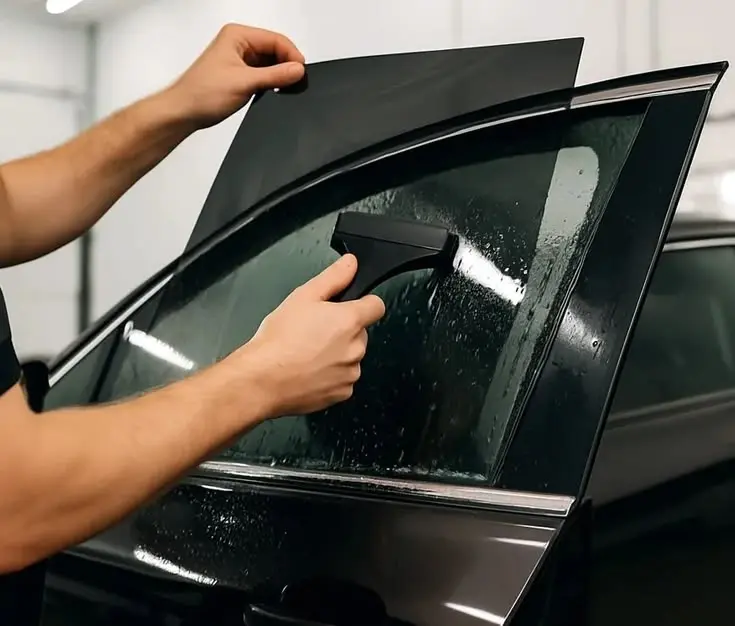
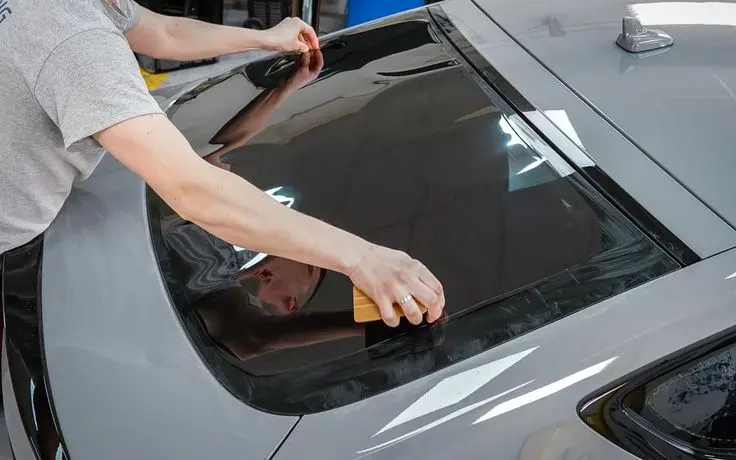
Car window tinting Qatar drivers rely on works by filtering out a large portion of solar energy before it ever gets inside. A quality tint can noticeably lower cabin temperature, which means less waiting around for the AC to catch up and a far more comfortable ride from the moment you start the engine.
Heat is the obvious issue, but ultraviolet rays are the quieter one. Ordinary car glass blocks some UV radiation, but not nearly enough. Prolonged exposure to UV rays while driving — especially on longer commutes — has real effects on skin health over time, and it’s something people in hot, sunny countries like Qatar deal with more than most.
This is where UV protection for cars becomes about more than keeping the interior looking nice. A properly installed window film can block the vast majority of harmful UV rays, protecting your skin and your eyes from the kind of everyday sun exposure that adds up over months and years of driving.
Anyone who’s owned a car in Qatar for a few years has probably noticed it: the dashboard starts to fade, the leather seats crack, and the steering wheel loses its original texture. That’s UV damage and heat exposure doing their slow work.
Tinted windows act like sunscreen for your car’s interior. Less direct sun and UV hitting your seats, dashboard, and trim means less fading, less cracking, and just less wear overall.
Basically, it’s a small spend today that saves you a much bigger headache later — your resale value, and how good the car still looks and feels down the road.
Here’s something most drivers don’t really clock until they check their fuel bill: when the cabin’s hotter, your AC compressor has to grind harder to keep up, and that extra effort ends up pulling more power straight from the engine. Over time, that adds up to higher fuel consumption.
When your windows are properly tinted, less heat gets in to begin with, so your AC doesn’t have to fight as hard to keep things cool. That translates into your compressor cycling less aggressively and, in turn, a bit of extra savings at the pump. It won’t turn your car into a hybrid, but every bit of reduced strain helps, especially with how much time cars in Doha spend running the AC pretty much year-round.
Before you pick a shade, it’s worth understanding Qatar’s tinting regulations, because this is one modification the Ministry of Interior takes seriously. Under current rules enforced by the General Directorate of Traffic, front side windows are generally allowed up to 20% tint, and windshields (front and rear) are limited to around 10%. Rear side windows and the back window have much more flexibility, with darker tints — in many cases up to 100% — permitted for family and rear glass.
If you want a darker tint on the front windows than what’s standard, you’ll need written permission from the Licensing Authority, arranged through your local traffic department. Skipping this step isn’t worth the risk — driving with non-compliant tint can result in fines and even vehicle impoundment until the film is corrected.
The good news is that a reputable tinting shop that works within Qatar’s regulations can still deliver excellent heat and UV rejection, even at the legally permitted shades. It’s less about how dark the film looks and more about the quality of the film itself.
Not all tint is the same, and honestly, the cheap stuff usually shows it fast. It might look fine on day one, but give it a year or two under Doha’s summer sun and you’ll start seeing bubbling, purple discoloration, or a film that’s basically stopped blocking any heat at all. So when you’re out looking for the best car tint Doha has to offer, don’t just go by how dark it looks in the shop. Ask about the actual UV rejection numbers, how well it holds up against infrared heat, and whether the shop backs it with a real warranty. If they’re confident in what they’re selling, they won’t hesitate to put it in writing.
At the end of the day, tinting your car in Qatar isn’t really about making it look sharper, even though that’s a nice bonus. It’s about not roasting every time you get in, keeping UV rays off your skin, saving your dashboard and seats from turning into cracked leather within a couple of years, and even easing the load on your AC so your fuel doesn’t disappear as fast. In a place as hot as Qatar, that’s a pretty easy case to make.
Sign up our newsletter to get update information, news and free insight.